
How missions work
Each mission round, players gather at a new location. You'll face a choice: try for gold and potentially help the group, or play it safe. Traitors can use missions to gather intel or undermine Faithfuls.
Fifteen different missions appear throughout the game, plus two events that are not missions at all. Each one tests loyalty and nerve.
Updated
Each mission round, players gather at a new location. You'll face a choice: try for gold and potentially help the group, or play it safe. Traitors can use missions to gather intel or undermine Faithfuls.
If you choose to pass (abstain from the mission), you contribute zero gold and are not eligible for shields that round.
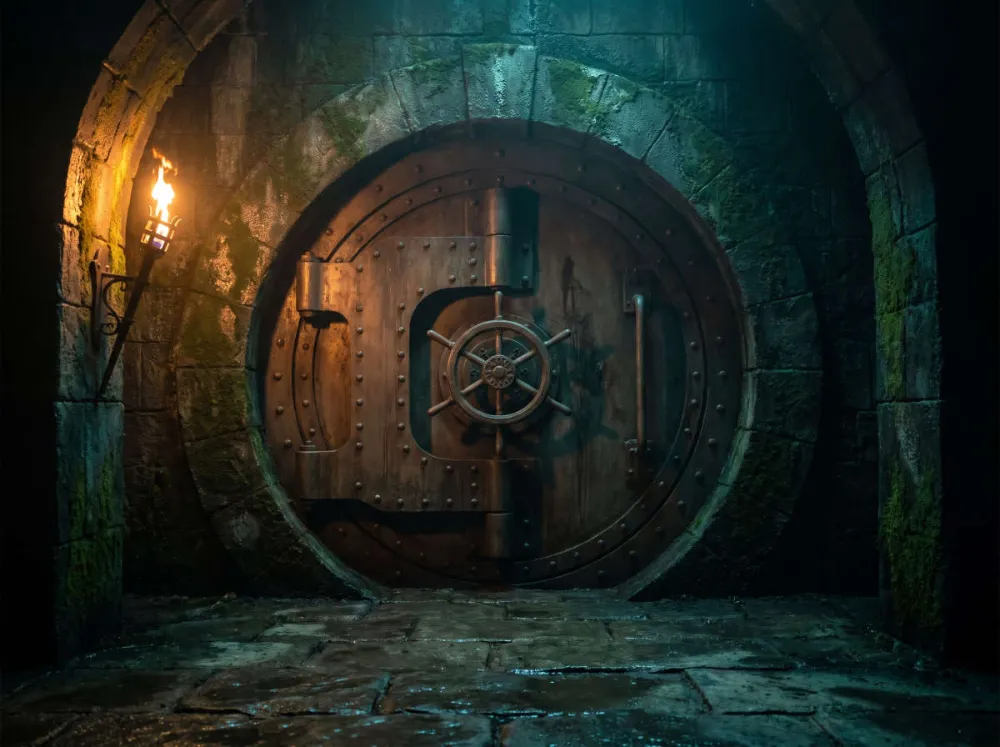
Try the lock. Each successful attempt adds 50–250 gold to the pot.
Higher risk, but also guaranteed to resolve — everyone who tries will eventually succeed.
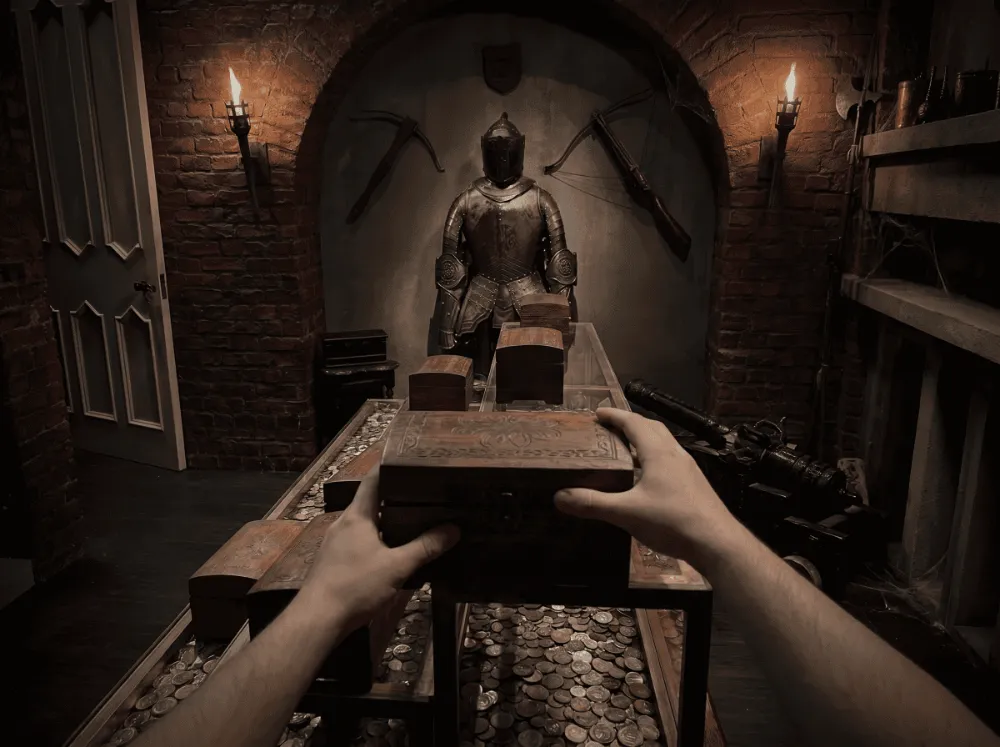
Open a box and claim its contents: gold or a shield.
Higher variance — luck matters. Early boxes can contain anything; later boxes reveal patterns as players choose.

Choose a segment of a blazing pyre. One segment hides a shield.
Pure luck on the shield, but guaranteed small gold reward. Good if you want a safe contribution.

A secret message will be delivered to one player.
Low stress but high information value — pay attention to who stays silent or seems to know something.
Answer a trivia question. Correct answers add gold to the pot.
Knowledge-based but risky — you could help or hurt the group. Betting on your smarts is brave.

Race against the clock. Complete the challenge fast enough to bank a shield.
Rewards confidence and speed. Shows who's calm under pressure, and who panics.
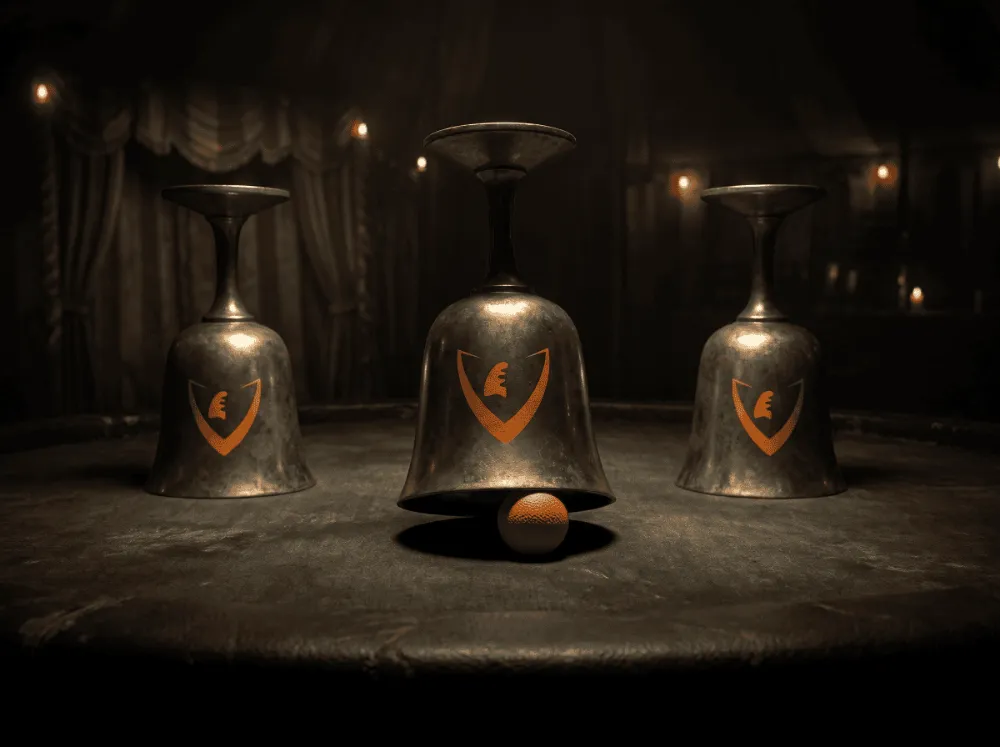
Choose one of three cups. One is richly filled, one is meagre, one is empty.
Pure chance. It's a gamble with no skill component — stress test everyone's nerve.

The cruelest mission. Burn a fellow player — or save them and sacrifice someone else to the flames.
The mission that breaks trust. Play it wrong and half the group turns on you instantly. Play it right, and Traitors can shift blame.

A sack of gold hangs from a fraying rope in your Quarters. Take as much as you dare for the castle — but don't be greedy.
Pure nerve. Push for a bigger haul or bank a safe amount early — and remember, nobody else's "safe" is the same as yours.

You're secretly paired with another player, gold on the table between you. Share it with the castle — or steal a reward for yourself.
A test of trust and reputation. Steal for the tool and wear the mark of a thief, or share to protect the pot — and your good name.
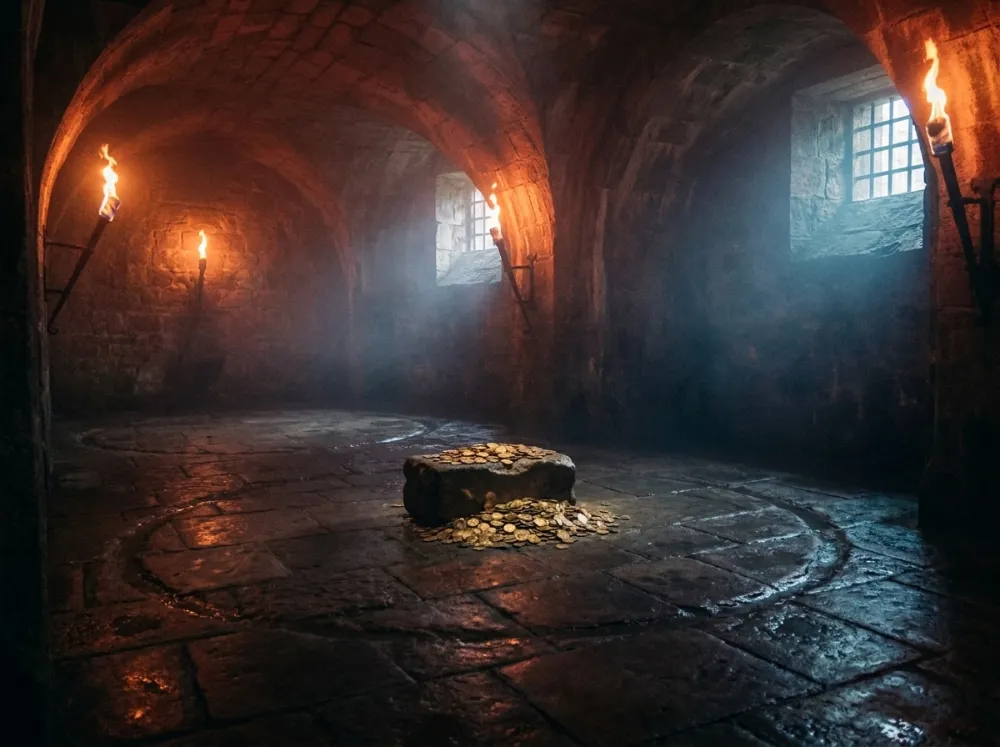
You are matched with one opponent and fight a single duel — and you can talk it over (and lie) in a private thread first. Each of you secretly picks a stance: Attack, Defend or Counter. The victor takes 1,000 gold, a stalemate pays 500 each, the loser takes nothing. This gold is paid to you personally — it is the only mission in the castle that never touches the prize pot. (Paired with an AI, it will genuinely negotiate back — and can be talked around.)
Winning is not always best. Exactly one of the night's losers walks away protected from murder, and the castle is never told who — so a defeat is worth something nobody outside can measure. Agree a stalemate and break it, or honour it and split. What you say you will do is the only information your opponent has, and there is no strongest stance — only the person opposite you.

A rope bridge over a gorge, 20 planks long — and only 8 of them will hold your weight. You set out carrying 2,000 gold for the castle's pot, and cross alone in your own Quarters. Put a foot wrong and you must throw 500 gold into the gorge before the ropes will take you again. Four rotten planks and you arrive with nothing. A fifth and there is nothing left to throw, so you go over with it.
Speed and safety pull against each other. Leap blind every turn and you will cross in the fewest moves and take the Shield — but nearly one crossing in five ends in the gorge with nothing, and those who do get back carry roughly a third of what a careful player brings home. Take the planks you can see and you will almost certainly arrive, purse fat, and far too slowly to win anything.
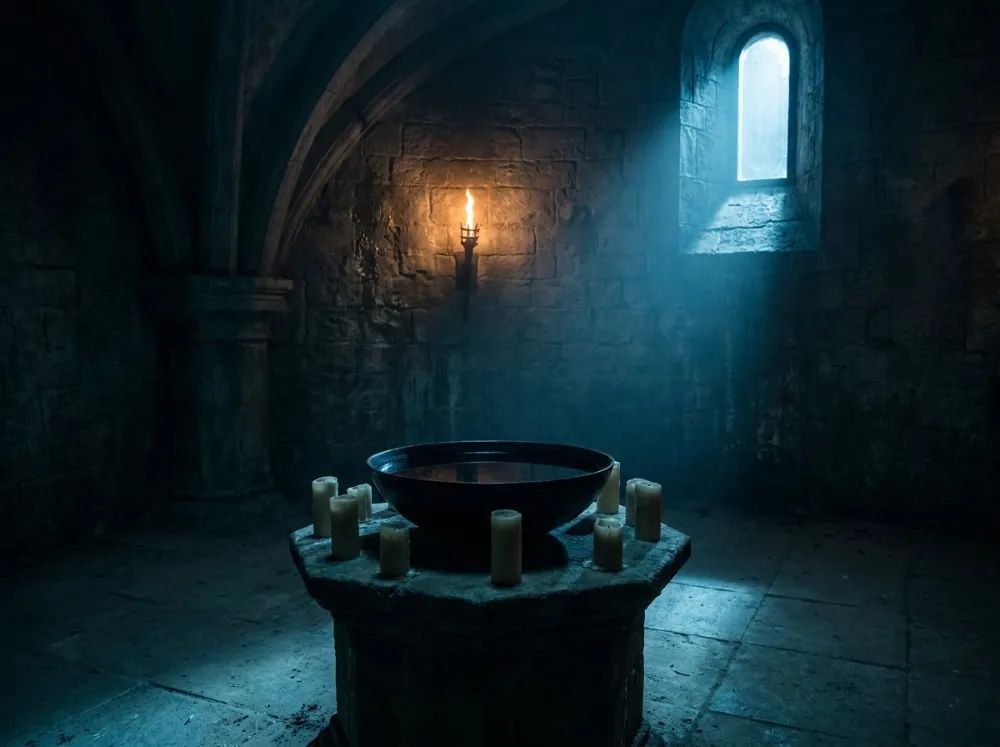
Name the player you believe the Traitors will murder tonight. Every call that proves right pays the castle 1,000 gold — and the names of everyone who called it are read out at the morning reveal.
The gold goes to the pot everyone shares, so it is not really the point — what the board decides is what the morning teaches the castle.
The Traitors see every name before they kill. Murder someone the castle collectively named and you have just confirmed their read works — the table learns to trust its instincts, and whoever pushed that name walks into the roundtable with real credibility. Murder someone nobody named and the castle learns its read was worthless, but the Traitors have visibly swerved every name on a list they were holding.
And if your name is against the person who dies, you will be asked how you knew. A correct call is worth having and dangerous to hold at the same time.
There is no safe call. There is only the one you can defend in the morning.
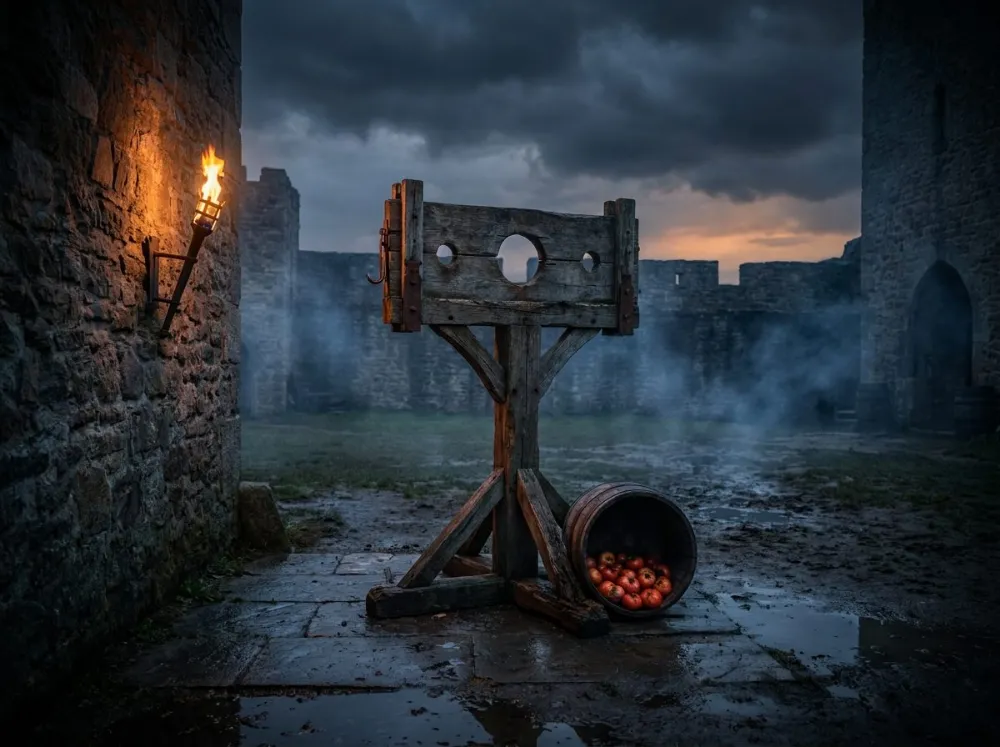
There is a pillory in the courtyard and a barrel of rotten tomatoes beside it. The castle chooses somebody to stand in it, and everyone else is handed two tomatoes. Every one that lands pays the pot — and if enough of them hit, the player in the pillory walks into that same day's roundtable already carrying votes against them.
This is the biggest single pot-builder in the castle, so everybody wants it to go well — including whoever is in the pillory, and including the Traitors.
But it is also an amplifier. Whatever the castle already believes gets a mechanical push at the roundtable, and the castle is not always right. Put the wrong person in that pillory and you have handed the Traitors a head start on banishing an innocent.
The vote for who goes in is secret precisely so you can choose freely. Nobody will ever know it was you — and nobody will ever have to defend it.
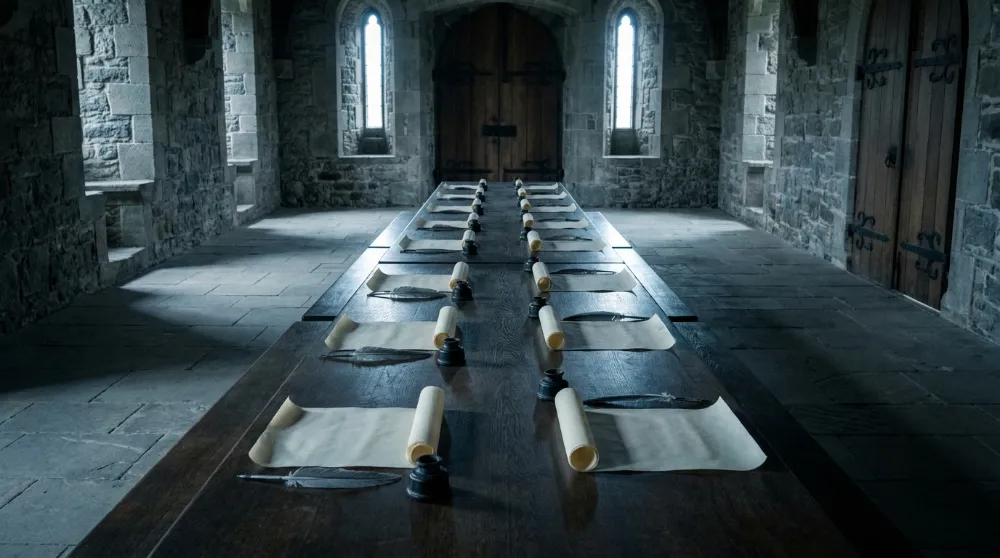
Secretly name one other player. If that player names you back, the pact holds and pays the castle 1,500 gold. A name that is not returned is worth nothing at all.
Nobody may speak while the naming is open. The hall is sealed until every name is in.
The Traitors have a guaranteed partner sitting right there. They are the only people in the castle who can be certain a name will be returned, so to them the gold is free — and they know it.
But taking it draws a public line between two players, and that line stays on the board for the rest of the game. Refuse it and you are gambling on a Faithful naming you back, and probably walking away with nothing.
For everyone else it is a question of who you think likes you enough to spend their one name on you. Reach for the obvious ally and you confirm what the table already suspected. Reach for someone unexpected and you may get nothing at all.
And every pair on that list might be the shielded one, or the allied one. You cannot tell which — and neither can the Traitors.
These only appear in a Marked for Death or Buried Alive game, and replace that day's mission. See Game modes.
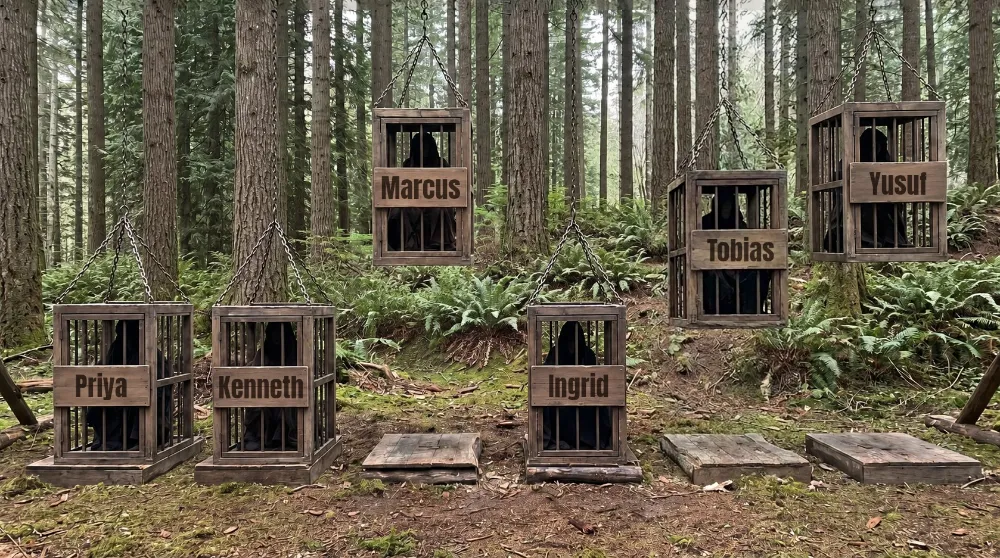
Only appears in a Marked for Death game, and it replaces that day's mission entirely. Six players have been taken to cages in the forest. Everyone still at the table has one chance to fight for one of them.
Anyone left unsaved is the only person the Traitors are allowed to murder that night — so a name nobody fights for is as good as chosen. The six can hear their own rescue land in real time, but can do nothing about it. Traitors fighting for a marked ally is a glaring tell, so they often will not.

Part one: the dig
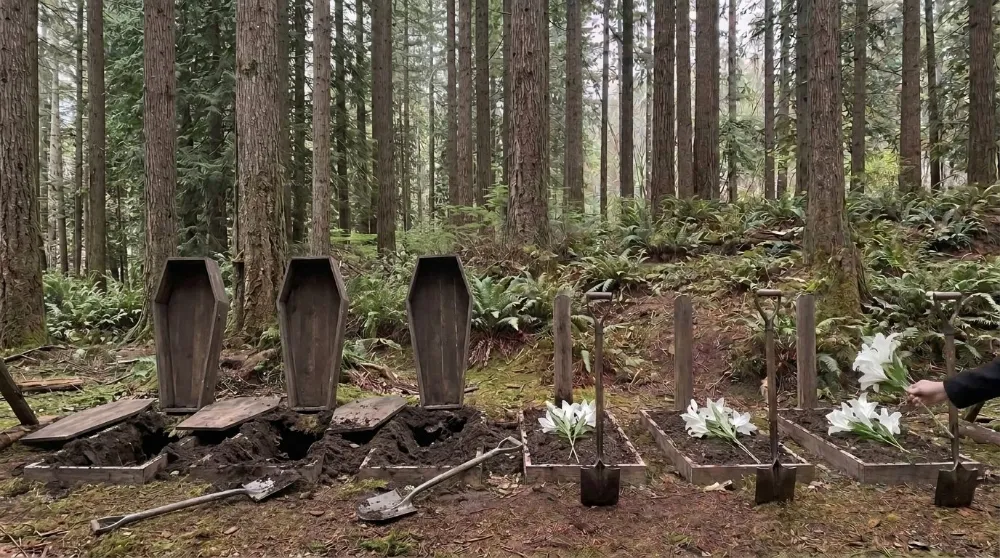
Only appears in a Buried Alive game, and it replaces that day's mission entirely. Six players were put in the ground overnight, one to a numbered plot. Everyone still above ground is handed a spade.
You know who was taken. You do not know which plot holds who, and nobody is going to tell you.
Three will be dug out. Three will not.
You cannot save your friend. You can only save somebody — and that is the entire mission. Every argument you would normally have about who deserves rescuing is worth nothing here, because the graves are numbered.
What is left is arithmetic in public. Pile onto a plot that is nearly through and you bank a rescue; spread out and you may open more, or none. The Traitors are digging alongside you and can steer that conversation freely, because for once they know exactly as little as you do.
Then come the lilies — and those are not blind at all.
Part two: the lilies
The second half of a Buried Alive day. Three caskets are still in the ground. Everyone who was not taken lays a single lily in one of them — a public guess at which of the three the Traitors will kill tonight.
It saves nobody. It only sets the price.
The Gold never goes to the Traitors — every coin lands in the communal prize pot that the winners split at the end. But the Traitors fully intend to be those winners, and that is the whole trap: agree as a castle and you swell a pot they may well walk away with; scatter your lilies and you keep it small and keep them guessing.
But here is what you cannot see from up there: a Traitor can be buried and cannot be murdered. So if the three still under include one of theirs, the obvious kill may simply be impossible.
Which means the morning tells you something. If the name every one of you agreed on climbs out of that hole alive, there are only so many reasons why — and the person it happened to will have to explain every one of them.
And the three who came up are at the roundtable that evening. They can vote. Nobody can banish them.
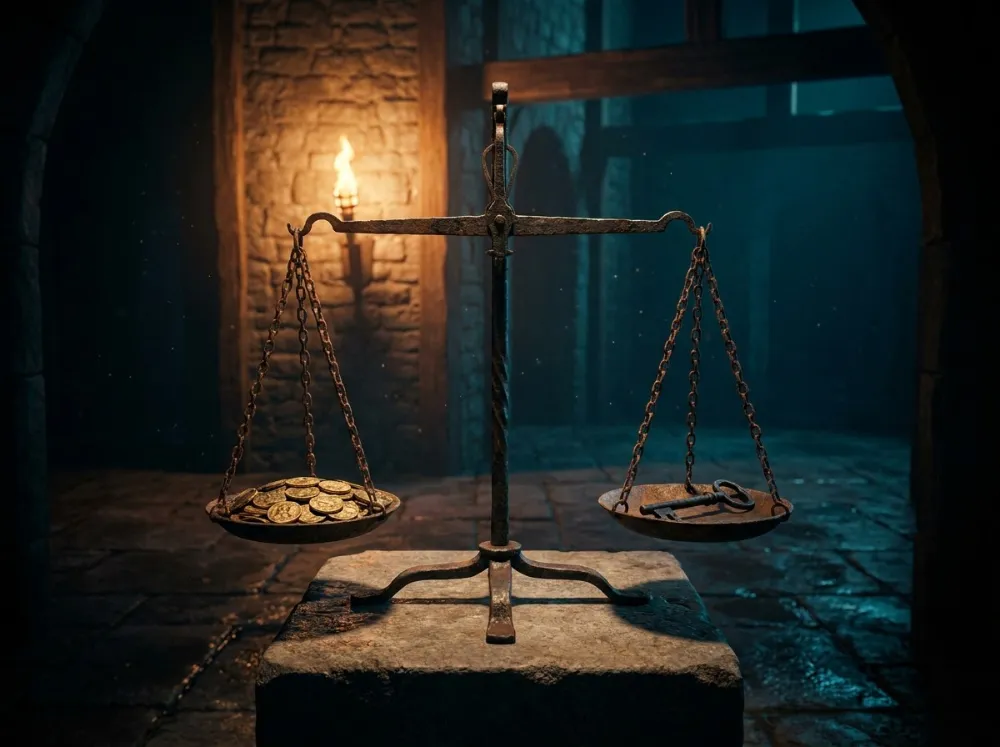
Not a mission — an event, and it happens once per game at most. It arrives straight after a roundtable once ten or fewer of you are left, on top of whatever mission that round already had. Claudia offers the castle a bargain: pay a share of the prize pot, and the Traitors get nothing at all that night.
The gold is the castle's and the Traitors expect to win it too, so nobody is arguing against their own interest here — which is exactly what makes the vote hard to read. "We cannot afford this" is an honest Faithful position and precisely what a Traitor protecting their night would say.
The sharpest moment to spend it is the night after you have correctly banished a Traitor: they are a member down, and a night they cannot recruit is a night they stay down. Which also means a Traitor arguing very hard to refuse on that particular night has a motive everybody at the table can see.
You only get one. Where you spend it says as much as how you vote.
Games run in our Discord server. It's free: join, sign up for the next one, and trust no one.